
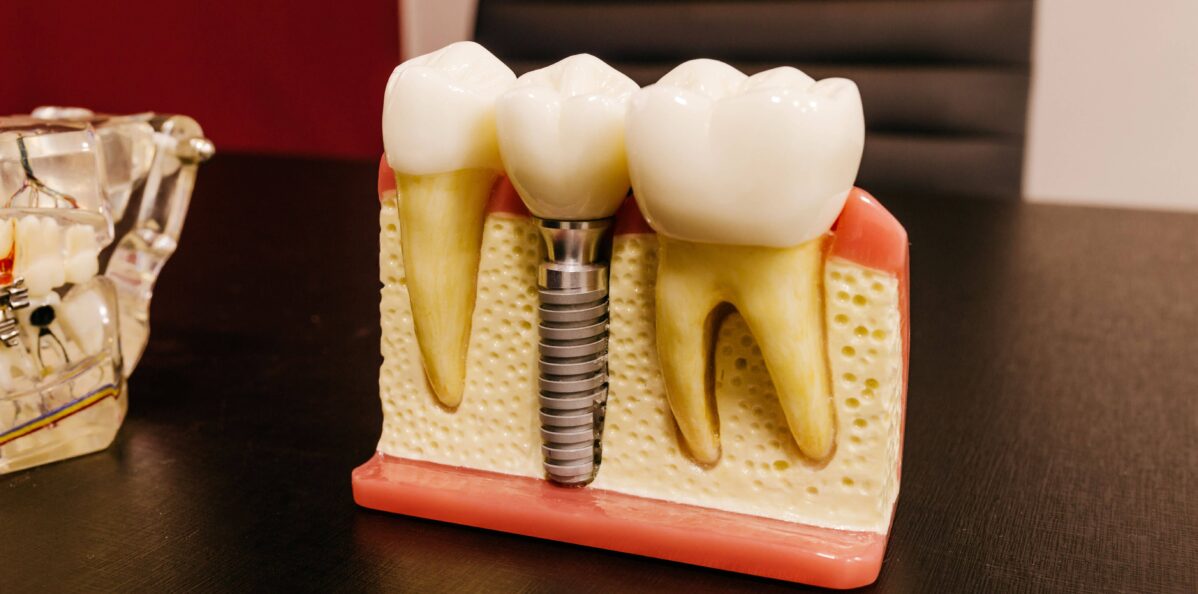
Missing a tooth — or several — and wondering if implants are actually an option for you? Most people are better candidates than they assume, but a few health and lifestyle factors do matter. Here’s how to know where you stand before you book a consultation.
The Basic Requirements
At a minimum, a good implant candidate generally has:
- Enough jawbone density to anchor the implant — bone loss after missing teeth for a long time can affect this, but it doesn’t automatically rule you out (more on that below)
- Healthy gums, or gum disease that’s been treated and stabilized first
- Good general health that supports healing, since implant placement is a minor surgical procedure
- A commitment to oral hygiene during healing and long-term, since implants still need to be cleaned like natural teeth
None of these are pass/fail on their own — they’re what a proper evaluation is actually assessing.
Factors That Need a Closer Look (But Rarely Disqualify You)
Bone loss. If you’ve been missing a tooth for years, some bone loss in that area is common. This used to be a bigger obstacle — today, a bone graft or sinus lift can often build up enough bone to support an implant. It adds a step to treatment, not a dead end.
Gum disease. Active gum disease needs to be treated before implant placement, since the same bacteria that damage natural teeth can compromise an implant. Once it’s under control, most patients move forward normally.
Smoking. Smoking slows healing and raises the risk of implant failure, but it doesn’t automatically disqualify you — many providers ask patients to cut back or pause around the surgical window rather than ruling it out entirely.
Diabetes. Well-controlled diabetes is generally fine for implants. Poorly controlled blood sugar affects healing, so this is usually a “get it managed first” conversation rather than a no.
Age. There’s no upper age limit for implants — healthy patients in their 70s and 80s get implants regularly. The main age-related consideration is on the younger end: implants are typically placed after jaw growth is complete, generally late teens or older.
What an Evaluation Actually Involves
Self-diagnosing online only goes so far, because bone density and gum health aren’t things you can accurately assess yourself. A proper evaluation includes:
- A review of your dental and medical history, including any conditions or medications that affect healing
- X-rays or a 3D scan to measure bone density and map the area precisely
- A gum health check, treating any active disease first if needed
- A conversation about your options — standard implants, a bone graft first, or All-on-4 if you’re missing multiple teeth
This is also where cost and timeline get real numbers attached, instead of the wide ranges you’ll find searching online.
If You’re Missing Multiple Teeth
Candidacy questions get more involved if you’re missing several teeth or considering full-arch replacement. See our guide on All-on-4 Dental Implants for what that evaluation and process looks like specifically.
Not Sure Implants Are the Right Fit?
Implants aren’t the only option for a missing tooth. If you’re weighing implants against a bridge or denture, see our comparison: Dental Implants vs. Bridges vs. Dentures.
Does CDCP Cover Any of This?
If you’re on the Canadian Dental Care Plan, coverage is limited for implants specifically — see our full breakdown of what CDCP does and doesn’t cover before you plan your budget around it.
Book Your Implant Evaluation
The only way to know for certain if you’re a candidate is a proper evaluation — not a guess based on general guidelines. We’ll assess your bone density, gum health, and medical history, and give you a clear answer along with your options. We serve patients across Langley Township, Walnut Grove, Willowbrook, Brookswood, Fort Langley, and nearby Maple Ridge and Aldergrove.
Call 604-888-6885 or contact us online to book your implant consultation.
Frequently Asked Questions
Am I too old to get dental implants?
No — there’s no upper age limit. Healthy patients in their 70s and 80s get implants regularly. The main requirement is good general health that supports healing, not age itself.
Can I get implants if I’ve had bone loss?
Often, yes. A bone graft or sinus lift can build up enough bone to support an implant in most cases. It adds a step to treatment rather than ruling it out.
Does smoking disqualify me from getting dental implants?
Not automatically. Smoking slows healing and raises the risk of implant failure, so many providers ask patients to cut back or pause around the surgical window rather than ruling it out entirely.
Can I get dental implants if I have diabetes?
Well-controlled diabetes is generally not a barrier. Poorly controlled blood sugar affects healing, so that’s typically addressed first.
What happens at a dental implant evaluation?
A review of your dental and medical history, X-rays or a 3D scan to check bone density, a gum health check, and a conversation about which implant option — standard, bone graft first, or All-on-4 — fits your case.