
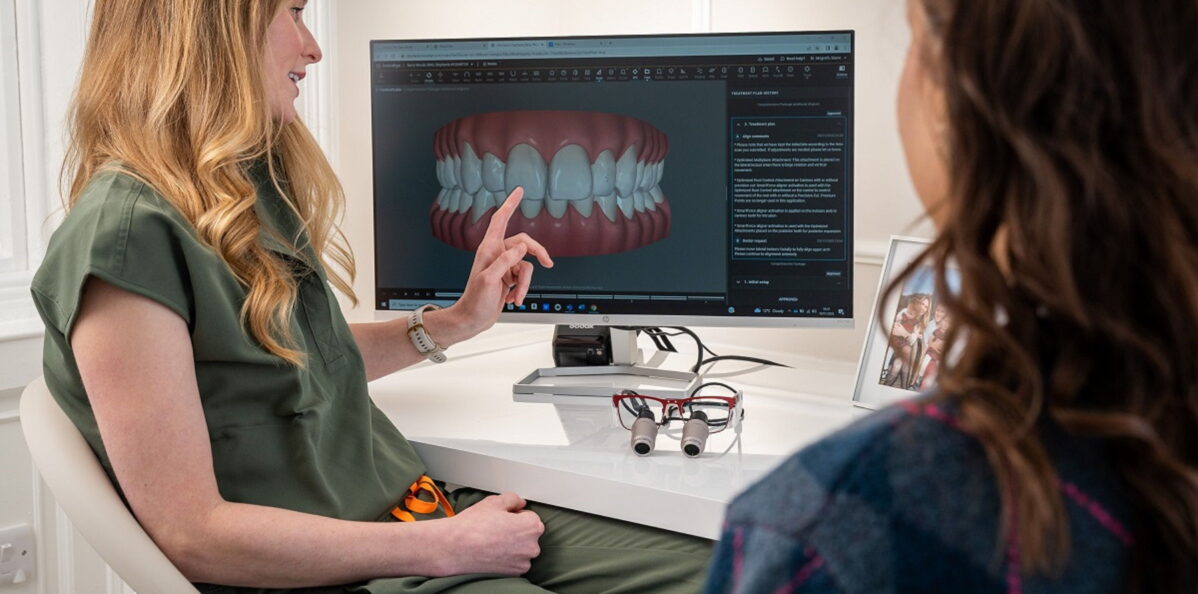
One of the first questions every Invisalign patient asks is simple: how long is this actually going to take? The honest answer is “it depends” — but not in a vague way. Your Invisalign timeline comes down to a handful of specific factors, and most patients can get a realistic range before they even start.
Here’s what actually determines how long Invisalign takes, and what you can do to stay on track.
Typical Invisalign Treatment Time by Case Severity
| Case Severity | Invisalign Timeline |
|---|---|
| Mild (minor crowding or spacing) | 6–12 months |
| Moderate (noticeable crowding, some bite issues) | 12–18 months |
| Complex (significant overbite/underbite/crossbite) | Often longer, or not the best fit for Invisalign alone |
These are ranges, not guarantees — your actual timeline depends on your bite, how much movement your teeth need, and how consistently you wear your aligners.
The Biggest Factor: How Much Movement Your Teeth Need
Invisalign timelines are driven almost entirely by how far your teeth need to move, not by a fixed “average” number of months. A patient with mild crowding will generally finish faster than a patient with a moderate bite issue. This is why an accurate timeline only comes from an actual bite assessment — online estimates are a starting point, not a prediction for your case.
Why Wear Time Matters More Than Anything Else
Invisalign aligners only work if you actually wear them — typically 20 to 22 hours a day. Every hour skipped is time added back onto your treatment. Patients who are diligent about wearing their trays consistently often finish close to their original estimate; patients who aren’t can see their timeline stretch by months, sometimes significantly.
A few habits that keep treatment on schedule:
- Only removing trays to eat, drink (anything but water), brush, and floss
- Switching to the next tray on schedule, not early or late
- Using a tray-tracking app if your provider offers one, for accountability
How Check-In Visits Affect Your Timeline
Invisalign still requires regular check-ins so your provider can confirm your aligners are tracking correctly before handing over your next set of trays. Missing or delaying these appointments is one of the more common — and avoidable — reasons Invisalign treatment runs longer than planned. Keeping a consistent visit schedule keeps things moving.
When Refinements Add Time
Sometimes your teeth need a bit more movement than the original set of trays accounted for. Your provider may add a round of “refinement” trays partway through or near the end of treatment — this is normal and doesn’t mean something went wrong, but it does add a few weeks to a few months depending on how much extra movement is needed.
Invisalign vs. Braces: Does One Move Faster?
Not reliably — see our full side-by-side in Invisalign vs. Traditional Braces. For mild to moderate cases, timelines between the two are often similar. The real difference is what drives the timeline: braces move at a fixed pace regardless of patient behaviour, while Invisalign timelines depend heavily on how consistently the trays are worn.
What Happens After Treatment Ends?
Finishing active treatment isn’t the last step — nearly every Invisalign patient needs a retainer afterward to hold the new position while your bone and gum tissue stabilize. Skipping retainer wear is one of the most common reasons teeth shift back after treatment “ends.” Your provider will tell you how many hours a day, and for how long, you’ll need to wear yours.
Get a Realistic Invisalign Timeline for Your Case
The only way to know how long Invisalign will actually take for you is a consultation with a real bite assessment — not a generic online range. Our team can tell you honestly what to expect before you commit to treatment.
Call us at 604-888-6885 or contact us online to book your consultation. Curious what Invisalign costs alongside the timeline? See our full breakdown in Invisalign Cost in Langley: What Affects Your Price.
Frequently Asked Questions
How long does Invisalign usually take?
Most cases take 6 to 18 months depending on severity — mild crowding or spacing can finish in 6 to 12 months, and moderate cases typically take 12 to 18 months. An accurate timeline requires a bite assessment.
Does Invisalign take longer than braces?
Not necessarily — for mild to moderate cases, timelines are often similar. The biggest factor for Invisalign specifically is how consistently the aligners are worn (20-22 hours a day); skipped hours extend treatment.
What slows down an Invisalign timeline the most?
Inconsistent wear time is the single biggest factor — every hour a tray isn’t worn adds time back onto treatment. Missed check-in visits and mid-treatment refinements can also extend the timeline.
What are Invisalign refinements, and do they add time?
Refinements are an additional round of trays used when teeth need a bit more movement than the original plan accounted for. They’re a normal part of many treatment plans and typically add a few weeks to a few months.
Do I need a retainer after Invisalign finishes?
Yes. Nearly every Invisalign patient needs a retainer after active treatment ends to hold the new tooth position while surrounding bone and gum tissue stabilize. Skipping retainer wear is a common cause of teeth shifting back.